Morphing Thrombectomy Device
A scaled benchtop basket expands mechanically, rotates through clot proxies, and uses optical feedback to explore adjustable thrombectomy behavior.
- Institution
- University of California, Berkeley / Morphing Matter Lab
- Team
- Maxime Hache, Tony Wang, Bryn Schoen, Chantal Wang


- Research
- Mechanical Design
- CAD
- Mechanisms
- Prototyping
- Test & Validation
- Embedded Systems
- Medical Devices
Overview
The source report frames the device as a scaled model inspired by mechanical thrombectomy systems used in dialysis access procedures.
The public case study avoids clinical readiness claims: the prototype used PLA, steel wire, a hand drill, Arduino feedback, and jello-based clot proxies in benchtop trials.
Challenge
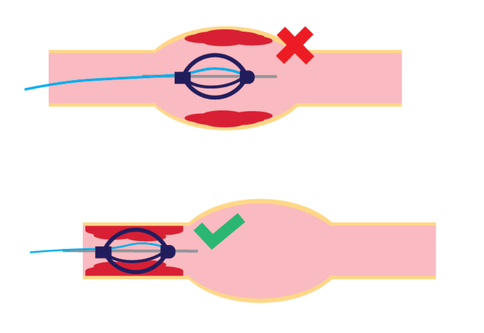
Fixed basket diameters can be inefficient when vessel geometry varies, and locating clot material normally involves imaging procedures.
The project explored whether a single basket could change diameter and provide simple optical feedback in a controlled bench model.
Process
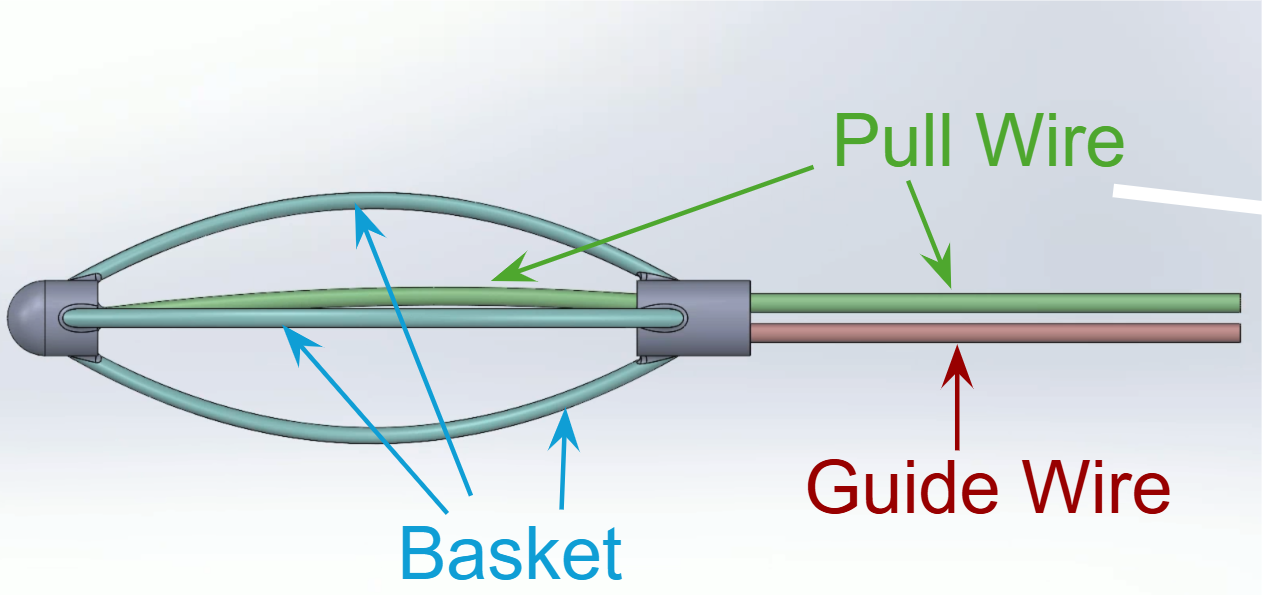
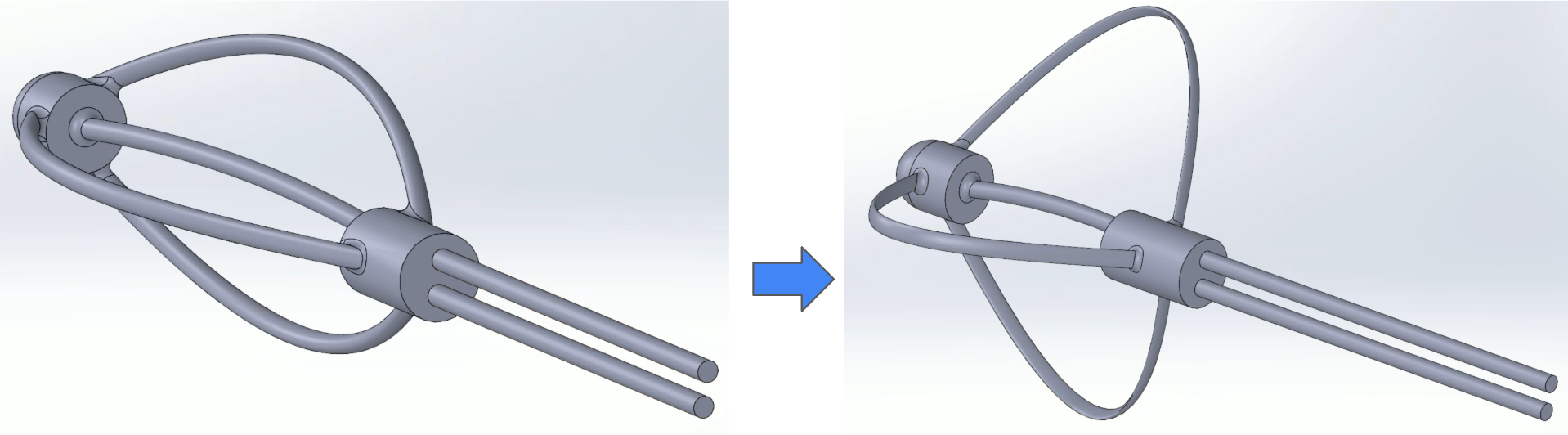
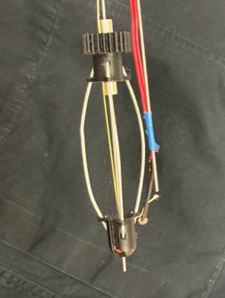
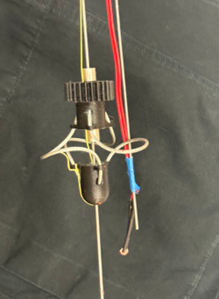
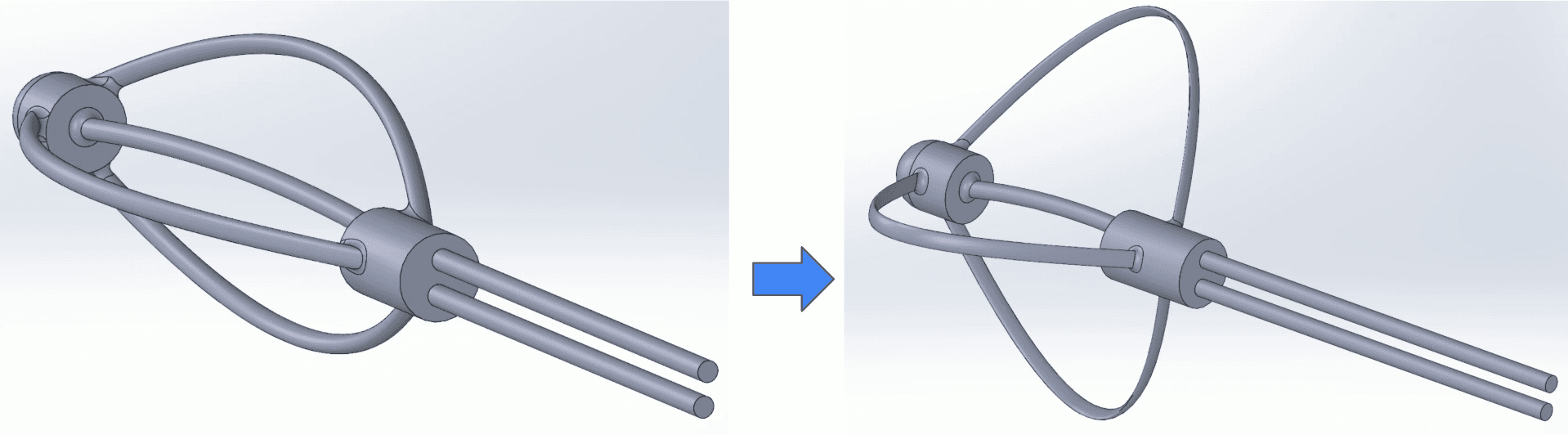
Two 3D-printed caps, braided galvanized steel wires, shaft collars, a central rod, and a pull string created a basket that expands radially as the end caps move closer together.
A photoresistor and LED circuit detected light differences between unobstructed regions and an opaque clot proxy.
Engineering Details
SolidWorks, 3D-printed PLA caps, braided galvanized steel wire, high-carbon steel rod, shaft collars, Arduino Uno, photoresistor, LED, hand drill, and transparent vessel mockups.
Implementation
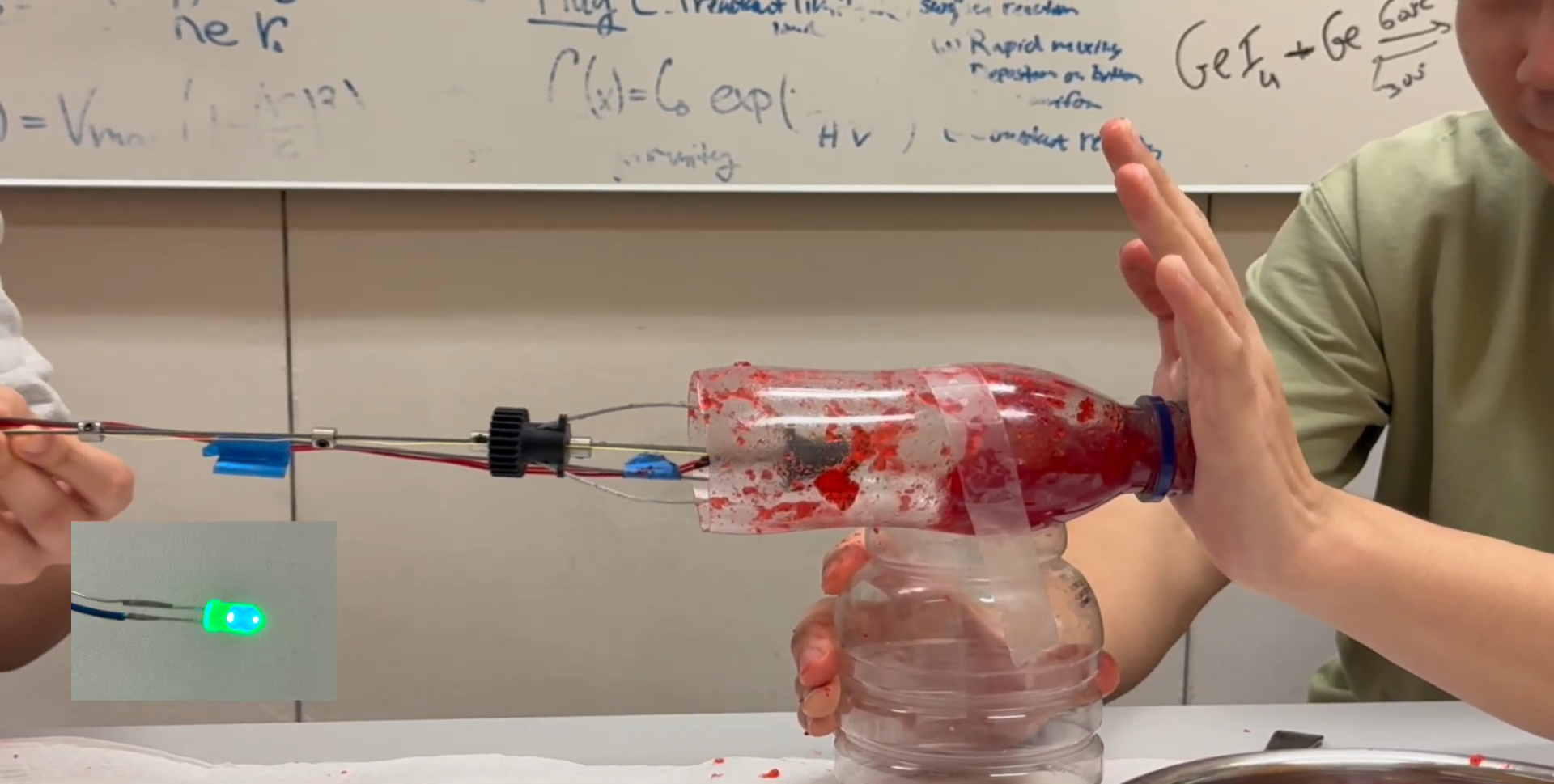
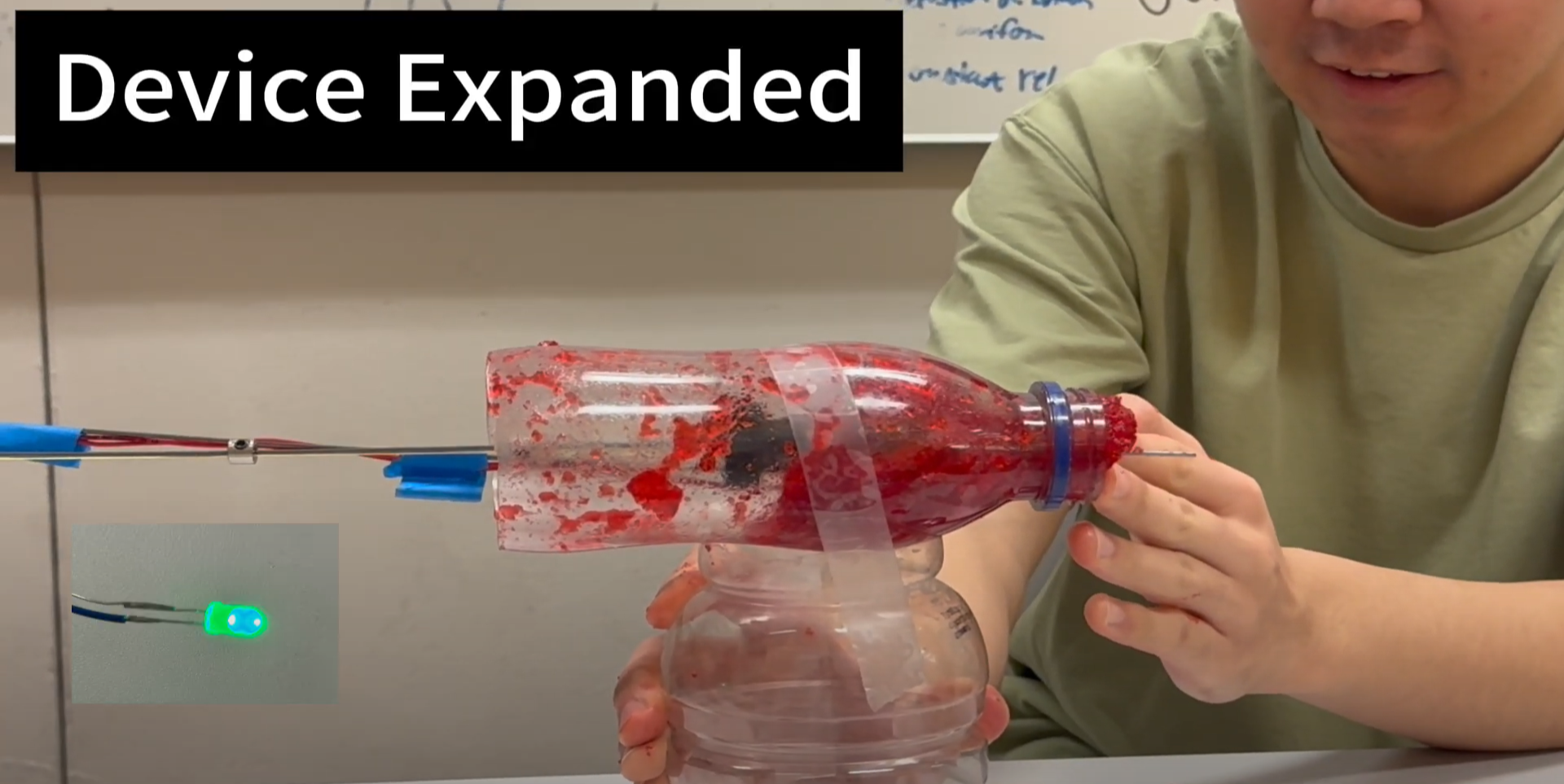
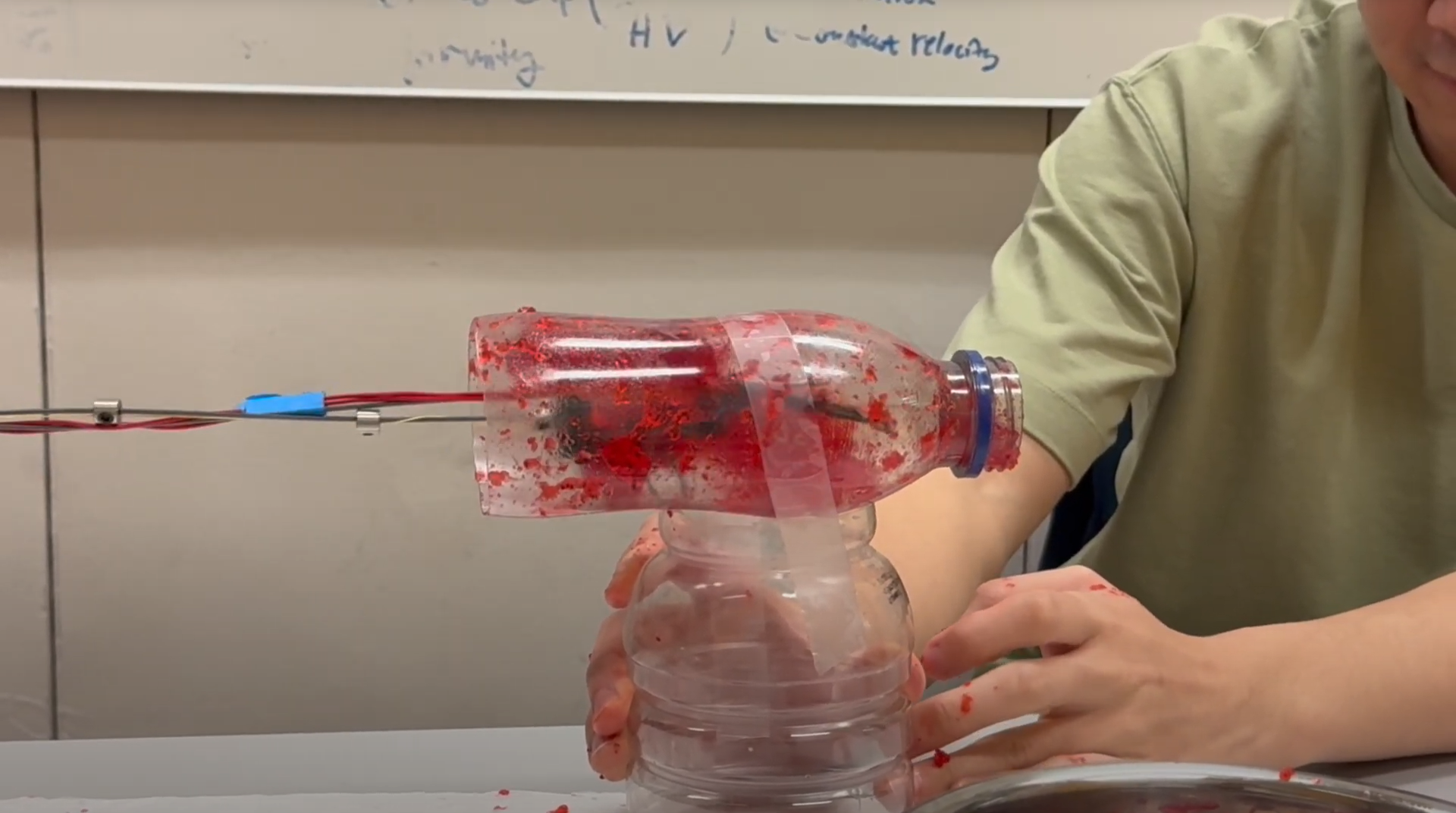
The scaled basket transitioned from a relaxed to expanded state through axial pulling and remained mechanically stable under drill-driven rotation in the mock setup.
The source report describes an operating range from approximately 4 cm to 9 cm diameter on the scaled prototype.
Testing
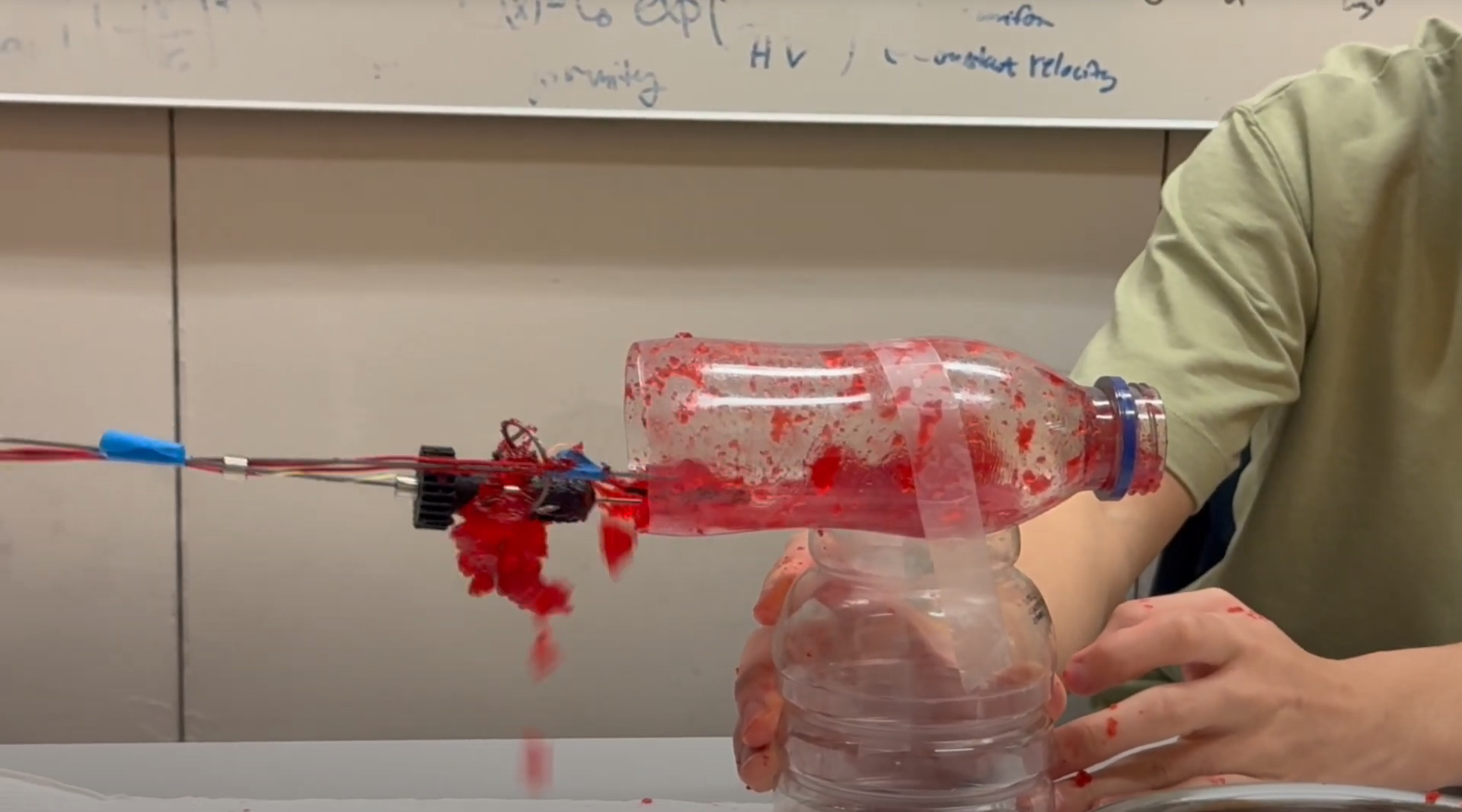
Benchtop trials used transparent vessel models and jello-based clot proxies to observe expansion, rotation, fragmentation, and optical feedback.
The report states that each centimeter of axial pulling produced roughly 0.71 cm of radial diameter increase in the scaled prototype.
Outcomes
The prototype demonstrates a mechanical principle, but material selection, scale, sealing, biocompatibility, catheter integration, RPM requirements, and sensing calibration remain open.
Optical feedback is promising only as an exploratory aid until tested against realistic anatomy, fluids, lighting, and clinical constraints.
Downsize to catheter-compatible dimensions, replace non-medical materials, seal the mechanism, calibrate optical values, automate diameter adjustment, and test whether sensing can supplement imaging workflows.
Gallery