Mechanical Vibrations Lab
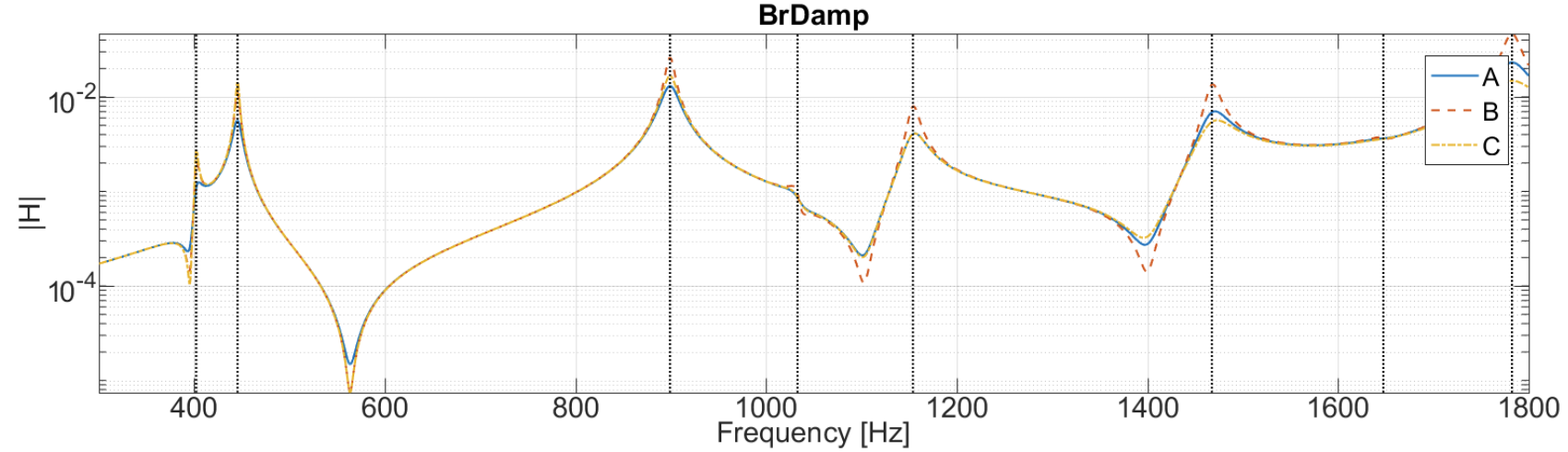
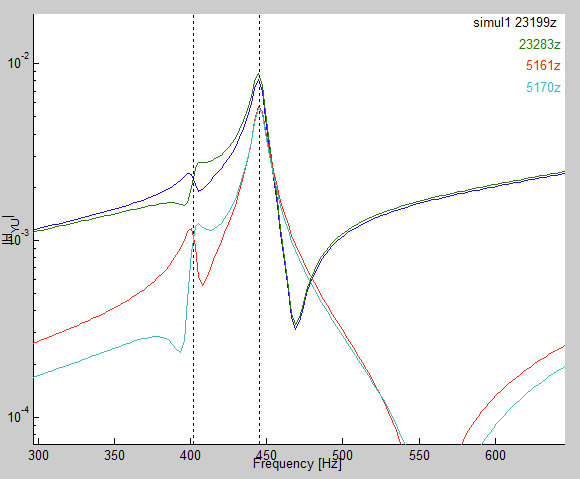
Experimental transfer functions and finite-element modal analysis are compared to identify modes, correlation gaps, and sensitivity trends.
- Institution
- Arts et Metiers / ENSAM
- Team
- Maxime Hache, Wilhem Abboura, Jean-Louis Roy

- Test & Validation
- Simulation
- FEA
- Dynamics
Overview
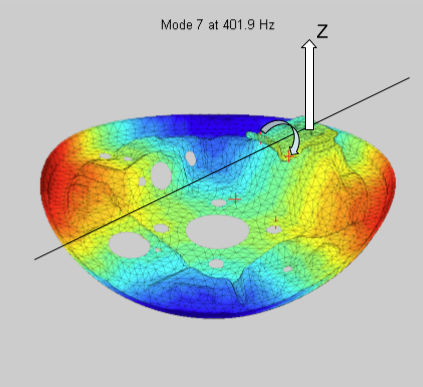
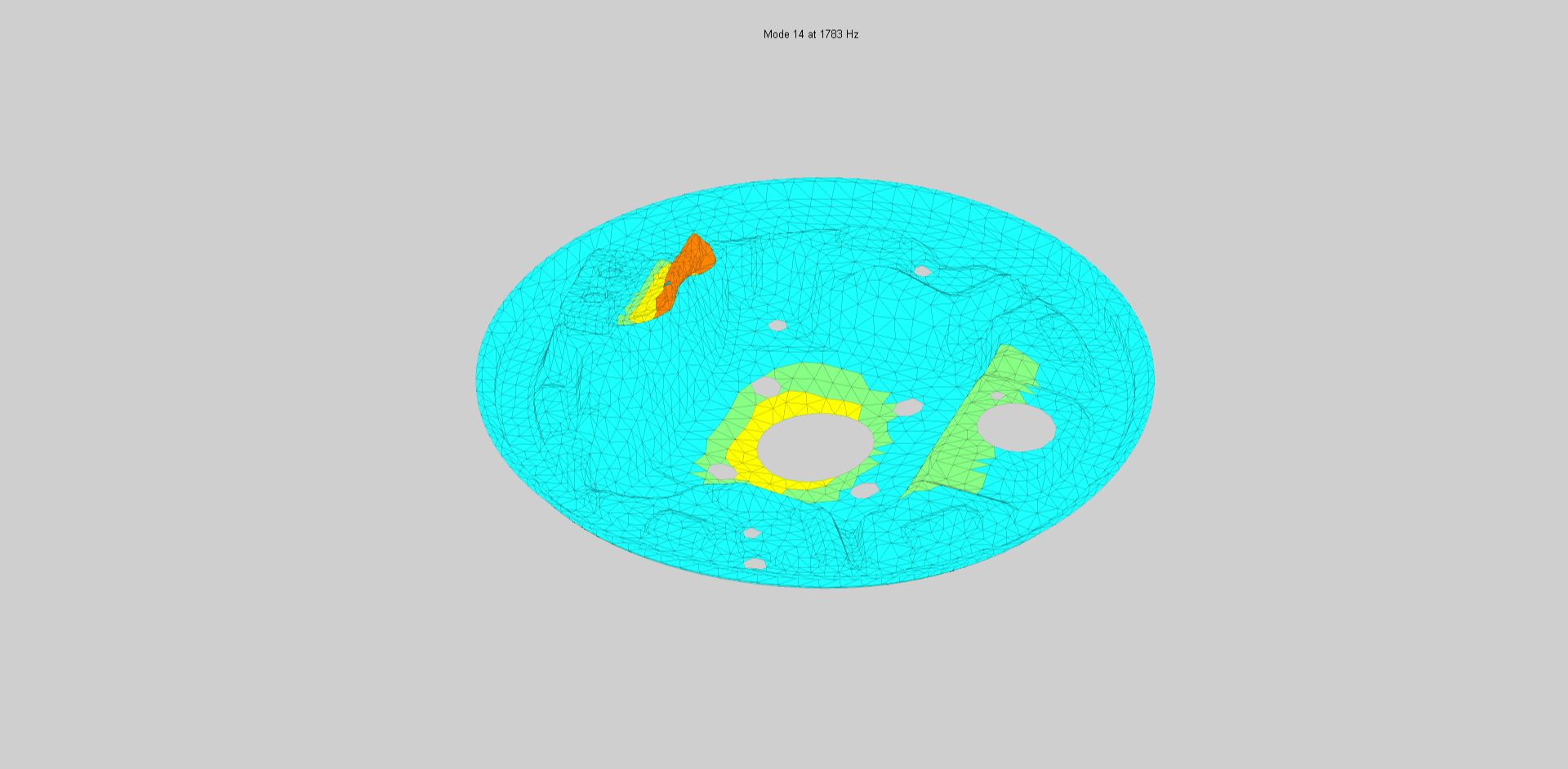
The report uses MATLAB/SDT to identify missing low-frequency modes, visualize mode shapes, correlate test and simulation using MAC, and run direct finite-element calculations.
Challenge
The initial model missed several modes below 1150 Hz, creating a gap between measured and simulated transfer functions.
Process
The team used modal identification, mode-shape visualization, MAC correlation, finite-element mode computation, and sensitivity reasoning.
Engineering Details
MATLAB, SDT toolbox, finite-element modeling, transfer functions, damping coefficients, MAC correlation, triangular 2D elements, tetrahedral 3D elements.
Implementation
The source report identifies example modes around 441.5 Hz and 507.4 Hz and compares observability across measurement directions.
Testing
Correlation was strongest for the first four modes, acceptable for modes five to seven, and weaker for later modes except one additional correlated mode.
Outcomes
The sensitivity study showed that simply increasing thickness can raise stiffness but only modestly shift a target frequency when it affects part of the structure.
Add annotated mode-shape exports and a clearer public comparison of measured versus simulated modal frequencies.
Gallery