Capstone Project BraceForward
Pressure-sensing inserts track brace fit and daily wear signals inside a scoliosis brace without redesigning the brace itself.
- Institution
- University of California, Berkeley / Fung Institute
- Team
- Maxime Hache, Brandon Nguyen, Ethan Lindgren, Lyna Luu, Winston Giang


- Research
- Mechanical Design
- CAD
- Prototyping
- Test & Validation
- Embedded Systems
- Medical Devices
- Materials
- Signal Processing
Overview
The project addresses a bracing-monitoring gap in adolescent idiopathic scoliosis: clinicians need more than a binary indication that a brace was worn. The prototype explores whether pressure sensing can provide information about brace fit and corrective force delivery.
The public case study is intentionally framed as a proof of concept. The source report calls for additional repeatability, motion-noise, wireless, and real-world validation before clinical claims can be made.
Challenge
Back braces can be uncomfortable, and treatment depends on whether the brace is worn as prescribed and tightened correctly.
A monitoring system must remain low-profile, flexible, removable for washing, and compatible with existing brace designs.
Process
The team evaluated several concepts with stakeholder input and a weighted Pugh matrix, selecting an attachable pressure-sensing garment rather than a redesigned brace.
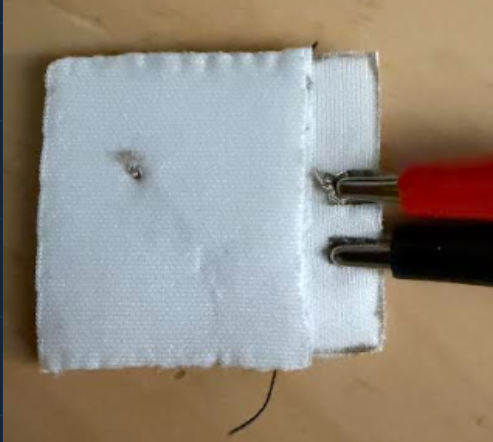
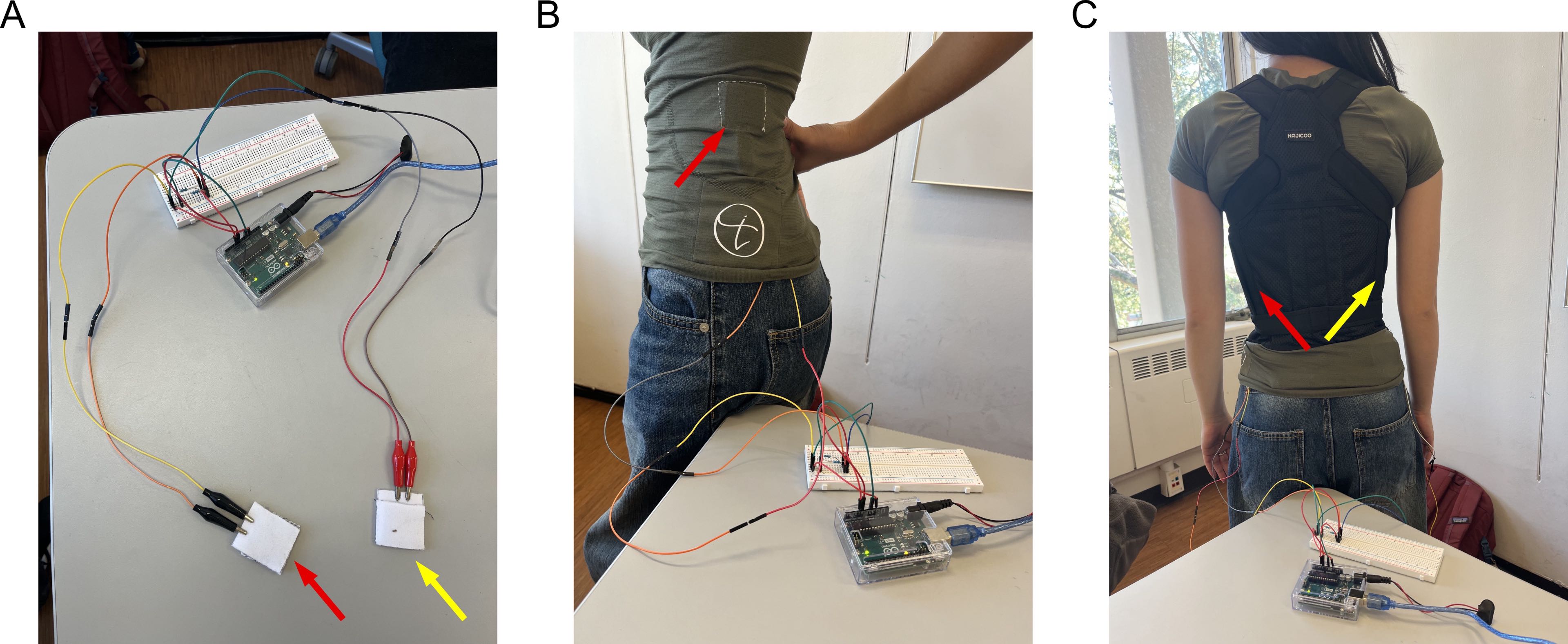
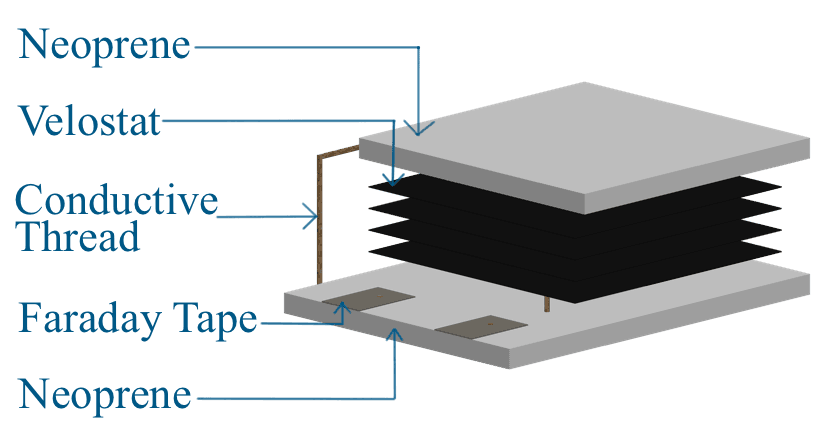
The selected architecture uses sewn sensor pockets, a pressure sensor matrix, and microcontroller-based data acquisition.
Engineering Details
Velostat, neoprene, conductive thread, Faraday tape, Arduino Uno, calibration weights, 3D-printed testing fixture, polynomial regression, and simulated-use testing.
Implementation
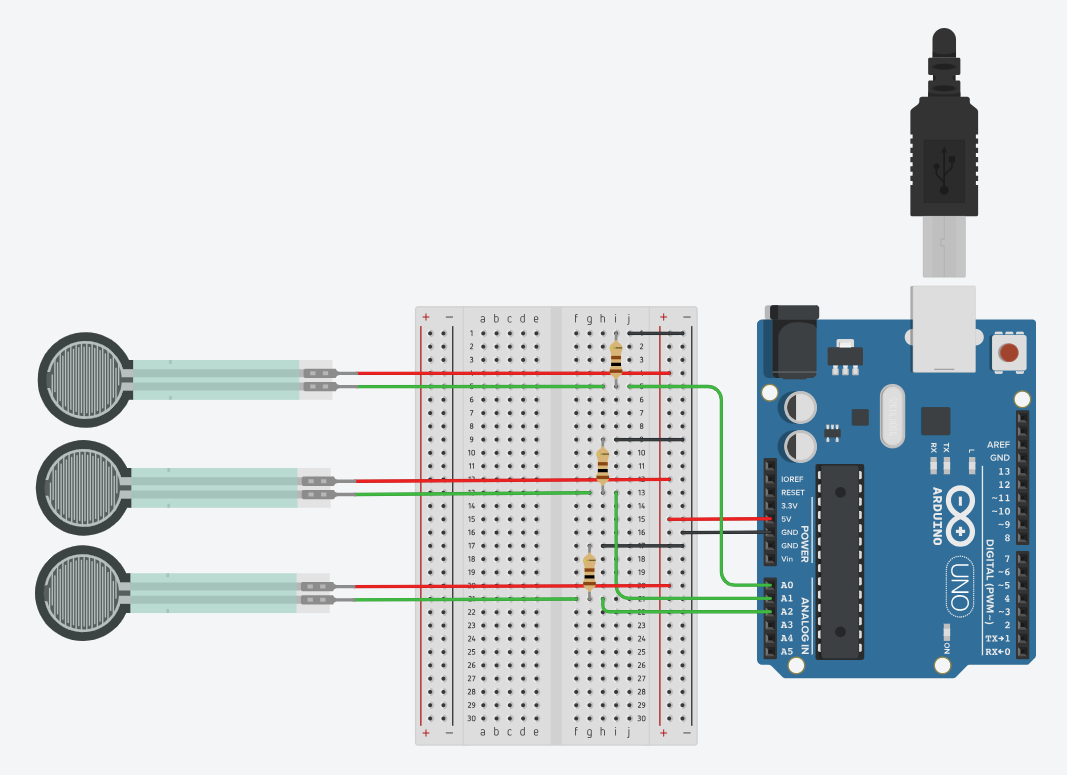
Three compact fabric sensors were integrated into a children's compression shirt at locations inspired by three-point brace pressure systems.
The Arduino reads analog sensor output, applies basic filtering, and converts readings after calibration.
Testing
Characterization tested Velostat layer count and series resistance. The reported best configuration was four Velostat layers with 100 ohm resistance.
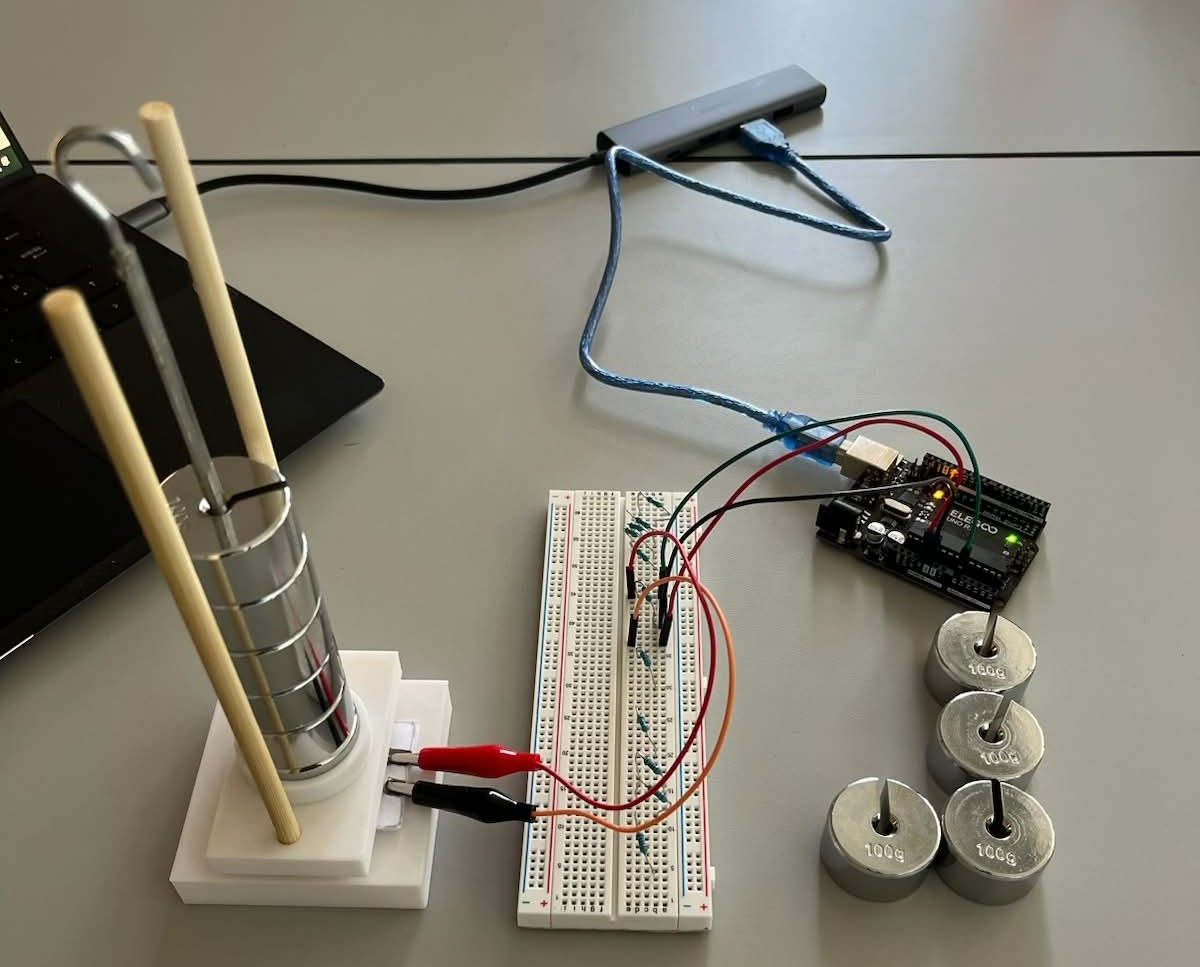
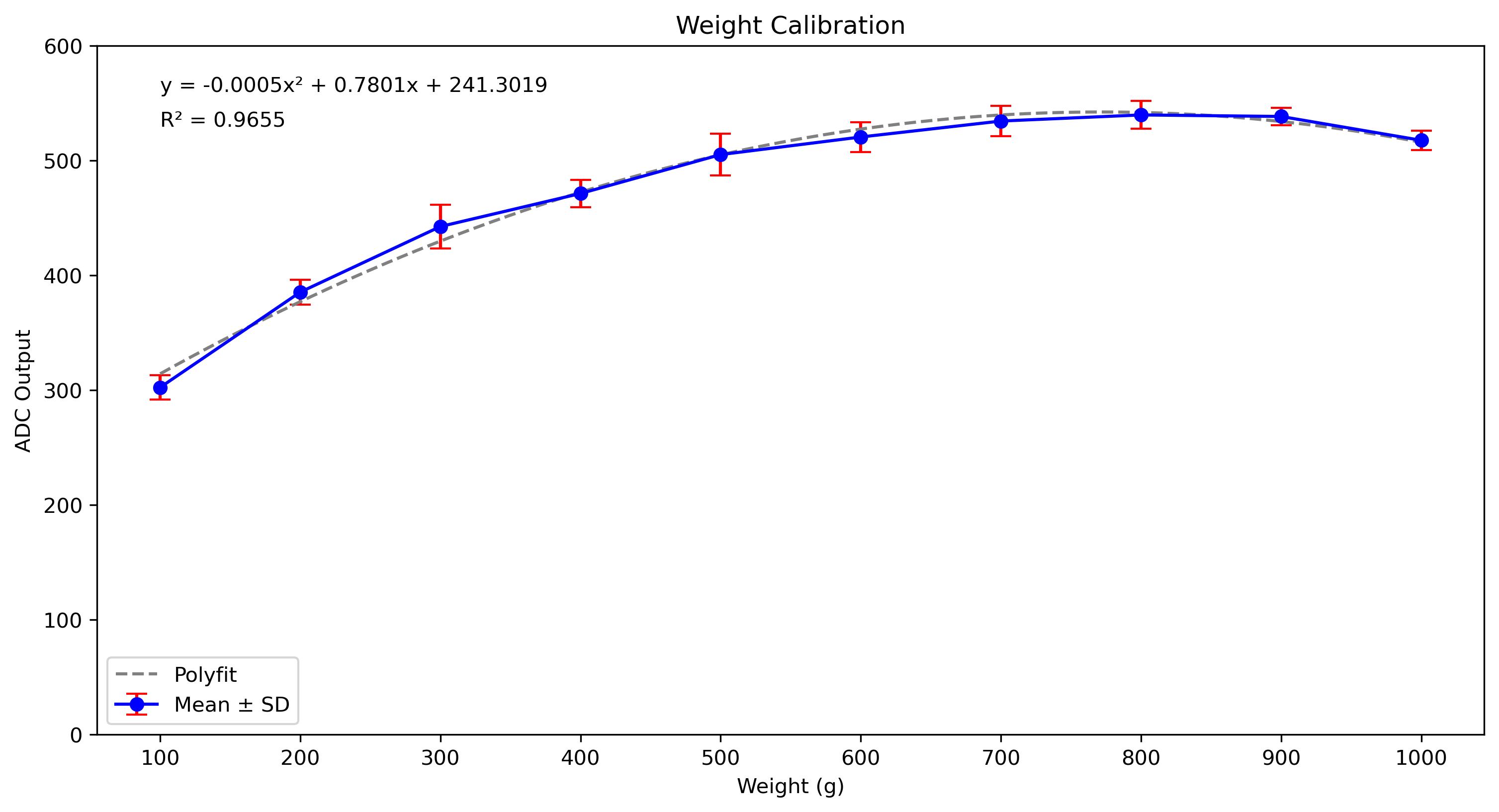
Calibration used ten trials with known weights and produced a second-degree polynomial fit with R2 = 0.97 in the source report.
A simulated-use test used a posture brace, rigid pressure discs, and sitting, walking, and jogging conditions with one participant.
Outcomes
Flexible pressure sensing is feasible but sensitive to contact resistance, hand fabrication variation, creep, humidity, temperature, shear, and motion artifacts.
The strongest engineering value is in the test workflow: characterize the sensor, calibrate each unit, then evaluate it under progressively more realistic use conditions.
Improve sensor repeatability, reduce motion-related noise, evaluate lower-power electronics, add BLE data transmission, and run formal repeatability and reproducibility testing.
Gallery