Active Noise Reduction in a Closed Cavity
An Arduino acoustic bench explores active noise reduction through sampling limits, phase adaptation, filtering, and closed-cavity experiments.
- Institution
- Newton engineering preparatory program
- Team
- Maxime Hache, project teammates

- Prototyping
- Test & Validation
- Signal Processing
Overview
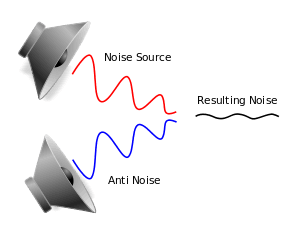
The presentation covers an experimental bench, Arduino ADC limits, frequency calculation, timer interrupts, filtered output, phase adaptation, and final observations.
Challenge
Active cancellation requires sending a signal of matching frequency with appropriate phase, while Arduino sampling and microphone sensitivity limit precision.
Process
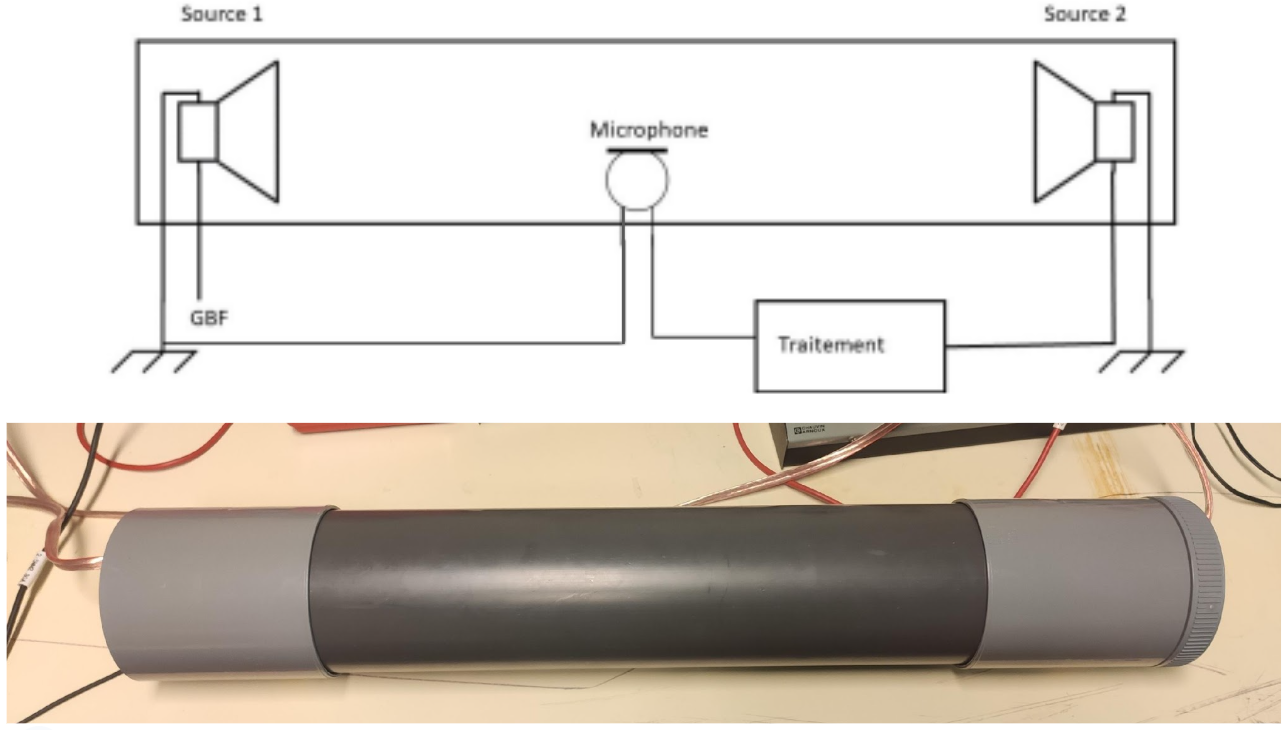
The work uses a test bench, voltage adaptation circuits, filtering, Fourier analysis, and phase variation experiments.
Engineering Details
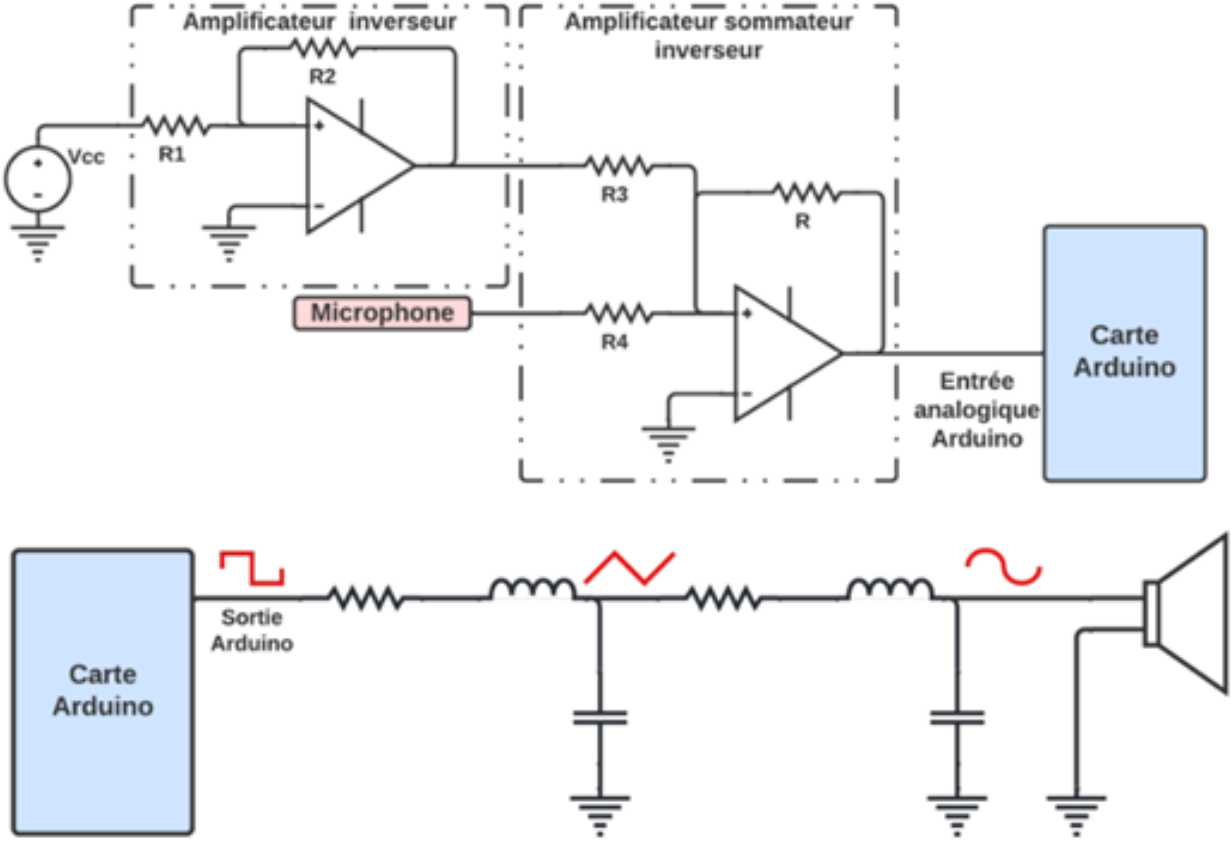
Arduino, ADC sampling, timer interrupts, microphone input, RLC filtering, inverse amplifier, summing amplifier, Fourier analysis, and oscilloscope-style signal comparison.
Implementation
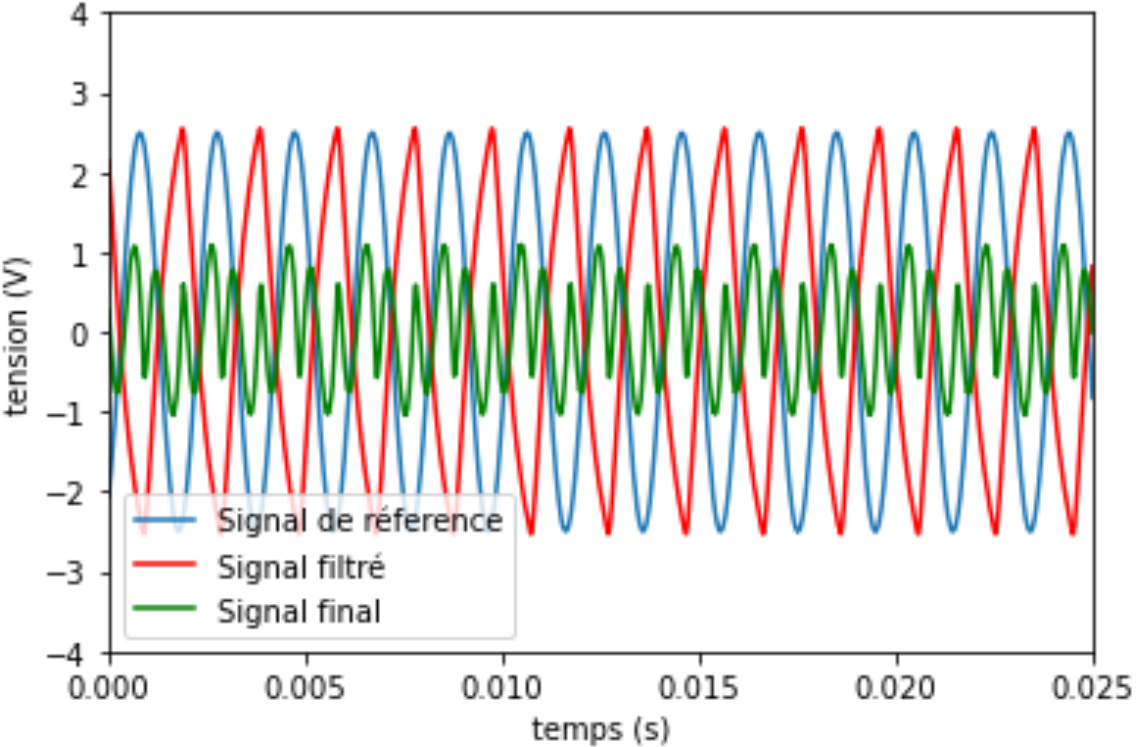
The system generates and filters a signal to compare against a reference tone in a closed acoustic setup.
Testing
The reported observations include frequency imprecision around plus or minus 3 Hz and phase-control limits linked to microphone sensitivity.
Outcomes
The project highlights how real-time digital control is constrained by sampling frequency, interrupt timing, memory, and signal-conditioning hardware.
Use a faster processor, improve interrupt timing, increase memory headroom, and validate cancellation over more frequencies and cavity conditions.
Gallery